Essential Backflow Prevention in the Greater Toronto Area: Why Goodwill Mechanical Is Your Local Compliance Partner
3 Dec 2025
Schedule Backflow Prevention Checkup
Essential Backflow Prevention in the Greater Toronto Area: Why Goodwill Mechanical Is Your Local Compliance Partner
Discover the importance of backflow prevention in the Greater Toronto Area and how Goodwill Mechanical can be your partner for compliance, installation, and annual testing across cities like Brampton, Mississauga, Oakville, and more.
Understanding Ontario's Backflow Prevention Program
What Is Backflow and Why It Happens
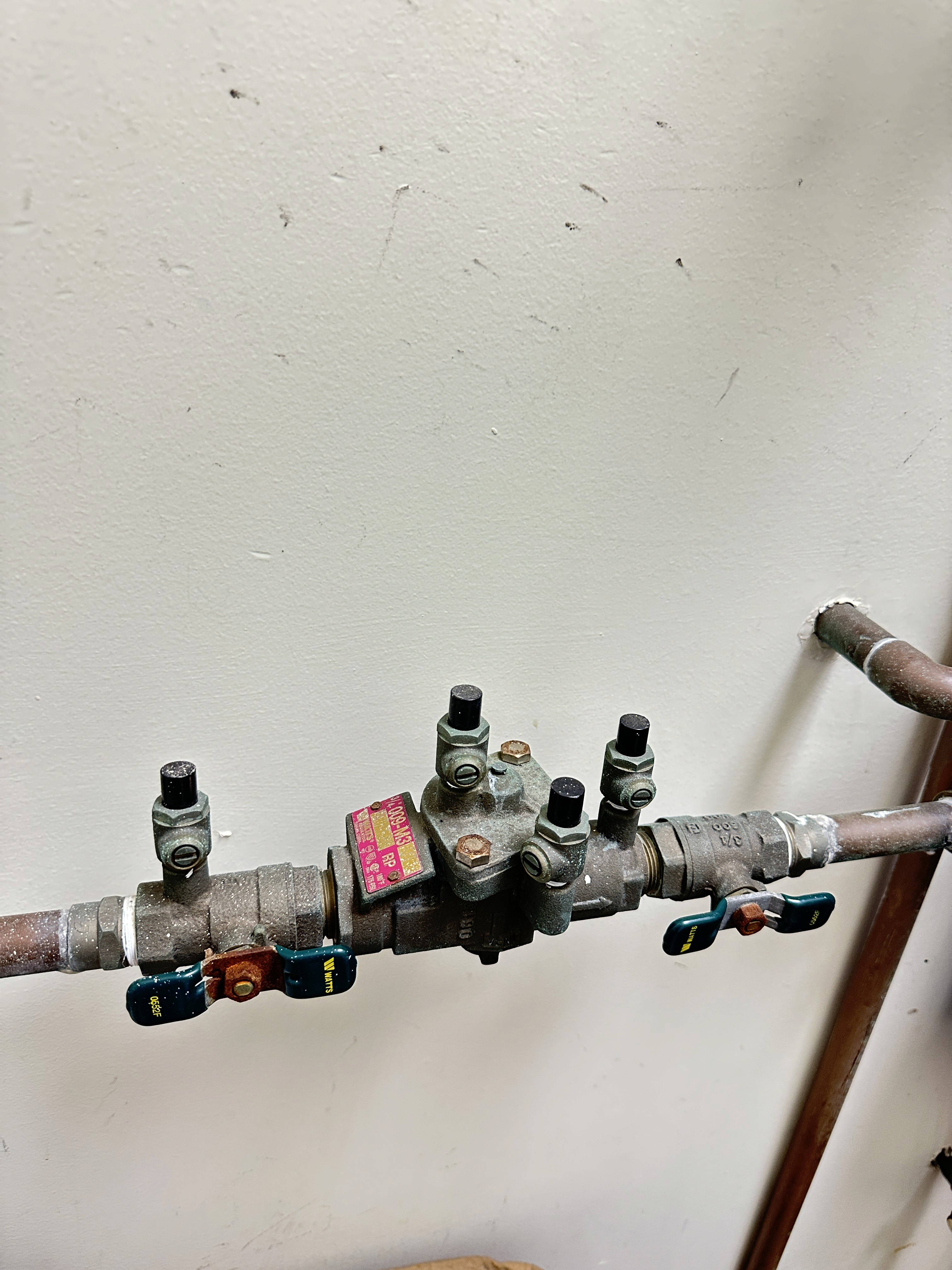
Backflow occurs when water flows in the reverse direction, potentially drawing contaminants into the public water supply. It typically results from a drop in pressure, known as back siphonage, or when water is pushed back due to higher downstream pressure—called back pressure. These events can compromise drinking water systems with hazardous substances like chemicals, sewage, or industrial fluids.
The Legal Framework in Ontario
Ontario municipalities enforce strict regulations to prevent backflow through local bylaws. These regulations mandate that certain types of properties—especially commercial, industrial, and institutional buildings—must install and annually test backflow prevention devices. The goal is to protect municipal water systems and ensure public safety.
Consequences of Non-Compliance
Failing to comply with municipal backflow programs can lead to serious consequences including fines, water shut-offs, and business operation disruptions. More critically, contaminated water can result in public health hazards, environmental damage, and legal liability.
Why Backflow Prevention Matters for Homes and Businesses
Protecting Potable Water from Contamination
Without proper backflow prevention, the water that flows into your sinks, showers, and irrigation systems can become a contamination source. Cross-connections between clean and dirty water lines must be isolated using backflow preventers to safeguard health.
Real-World Risks: Cross-Connections and Hazards
High-risk properties like dental offices, manufacturing plants, and car washes often pose elevated risks due to chemicals and equipment connected to water lines. Even restaurants and multi-unit residential buildings must take precautions.
Public Health and Environmental Safety
Backflow prevention isn't just about your property—it's a community-wide issue. Municipalities across the GTA mandate these devices to maintain safe water across neighborhoods and cities.
Who Needs Backflow Prevention Devices in the GTA?
Commercial, Industrial, and Multi-Unit Residential Buildings
Buildings with fire suppression systems, irrigation, commercial dishwashers, or hazardous material handling must install backflow prevention devices under municipal bylaws.
Hospitals, Restaurants, Salons, and More
Establishments involving healthcare, food service, or personal care often have higher contamination risks. These facilities are required by law to test and maintain certified backflow prevention systems.
City-by-City Mandates: Brampton, Mississauga, Oakville, Cambridge, Guelph, Waterloo etc.
Each municipality has unique bylaws. For instance, Mississauga requires annual testing for all testable devices, while Oakville emphasizes strict enforcement through building permits and inspections. Goodwill Mechanical ensures compliance in every jurisdiction.
Types of Backflow Prevention Devices
Double Check Valve Assemblies (DCVAs)
Used primarily for low-to-moderate hazard applications, DCVAs consist of two independent check valves and are installed to protect against non-toxic contamination.
Reduced Pressure Zone Assemblies (RPZs)
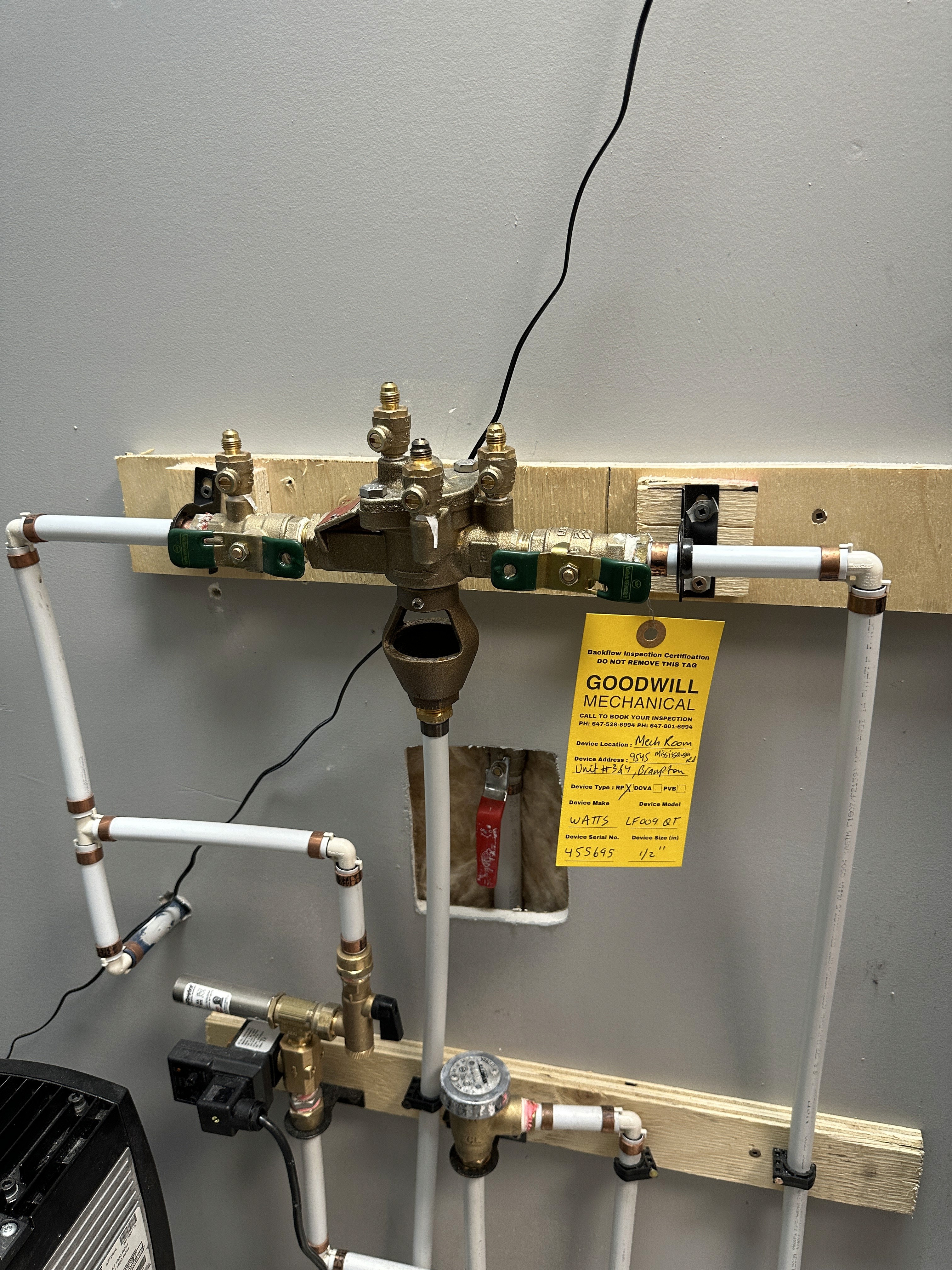
RPZ devices are designed for high-risk properties and include a relief valve between two check valves to release pressure and prevent contamination even during a device failure.
Air Gap and Other Specialized Devices
In some applications, an air gap—physical separation between water source and the receiving vessel—is the most effective method. Goodwill helps determine the right device based on your property and hazard level.
Installation Requirements Across GTA Municipalities
Brampton and Caledon
Brampton enforces backflow programs under its Cross Connection Control bylaw. Goodwill is registered to perform installations and annual testing across both Brampton and Caledon properties.
Mississauga and Milton
Mississauga requires initial and annual testing of all devices by licensed contractors. Goodwill handles everything from permit applications to certified testing reports. Milton follows similar standards.
Oakville, Guelph, Cambridge, and Waterloo
Oakville and Guelph have proactive inspection teams that check for compliance. Cambridge and Waterloo demand documentation and verified installation/testing by certified professionals. Goodwill has worked extensively in these regions with positive client outcomes.
How Goodwill Mechanical Specializes in Backflow Prevention
Certified Backflow Technicians
Goodwill employs licensed and certified testers trained under Ontario's cross-connection control standards. They ensure each device is correctly installed, tested, and documented.
Installation, Testing, and Maintenance Services
From new installs to annual retesting and repairs, Goodwill offers comprehensive services tailored to your property type and local bylaws.
Compliance-Focused Approach
With a deep understanding of regulations in each city, Goodwill ensures your property avoids penalties and remains compliant year-round.
Goodwill’s Regional Expertise Across the GTA
Brampton and Caledon: New Developments and Retrofits
In fast-growing regions like Brampton and Caledon, new commercial builds and retrofits require backflow prevention from day one. Goodwill Mechanical collaborates with developers and property managers to install compliant systems during construction, while also upgrading outdated systems in older properties.
Mississauga and Milton: High-Density Commercial Areas
Mississauga and Milton are home to dense commercial zones, including retail plazas, industrial parks, and healthcare facilities. Goodwill’s familiarity with municipal forms, inspector expectations, and tight deadlines makes them the go-to team for backflow compliance in these high-traffic areas.
Oakville and Guelph: Residential and Mixed-Use Properties
In Oakville and Guelph, a growing number of residential complexes and mixed-use buildings fall under mandatory backflow compliance. Goodwill assists property managers and condo boards in evaluating risk, scheduling tests, and ensuring long-term device functionality.
Waterloo and Cambridge: Institutional and Industrial Clients
Waterloo and Cambridge have stringent bylaws for institutional buildings and manufacturing operations. With a strong presence in these areas, Goodwill services universities, schools, laboratories, and industrial facilities—meeting unique challenges with precision and professionalism.
Annual Testing and Reporting Made Easy
What Municipalities Require Each Year
Most municipalities require annual testing of all testable backflow prevention devices. The testing must be completed by a certified technician, and results must be submitted to the local water authority or city department within a specified timeframe.
Testing Procedures and Paperwork
Goodwill Mechanical simplifies the process. Their certified testers conduct the inspection, complete all documentation, and submit it on your behalf. You receive a confirmation of compliance for your records.
Goodwill’s Streamlined Compliance Service
They maintain an internal database of your devices and send reminders ahead of your testing due date—so you never miss a deadline. Their streamlined scheduling and digital reporting ensure your peace of mind.
Emergency Services and Rapid Response
Urgent Repairs for Leaking or Failed Devices
Backflow preventers can fail due to age, wear, or freezing. If your device leaks or malfunctions, Goodwill offers emergency repair services to restore protection and keep your operations uninterrupted.
Restoration of Service with Minimal Downtime
For critical businesses like medical offices or food establishments, every hour counts. Goodwill’s quick response ensures that you’re back online fast—and in full compliance.
Maintaining Compliance with Municipal Bylaws
Local Backflow Prevention Bylaws Explained
Each GTA municipality enforces its own variation of the Cross-Connection Control Program. Some require hazard assessments, others mandate specific device types, and many enforce documentation submission deadlines. Goodwill’s team is familiar with each jurisdiction’s requirements.
Penalties and Enforcement Actions
Non-compliance can lead to water shut-offs, administrative fees, or enforcement orders. In some cases, city inspectors may issue citations for improper or missing devices.
How Goodwill Ensures You Stay Compliant
From the first device install to every annual test thereafter, Goodwill ensures your property is always one step ahead of inspections and enforcement actions.
Cost Considerations and Long-Term Benefits
Device Cost and Installation Pricing
Backflow preventer installation costs vary based on the device type, pipe diameter, and accessibility. Goodwill offers competitive pricing and free consultations for budgeting purposes.
Avoiding Fines and Water Shut-Offs
Annual testing is a minor investment compared to the financial and operational impact of fines, legal exposure, or water service interruptions.
Value of Preventive Maintenance
Routine checks can extend the lifespan of your backflow device, improve safety, and reduce emergency repair costs over time. Goodwill offers service plans to manage this affordably.
Client Testimonials Across GTA Municipalities
"We manage several plazas across Brampton and Mississauga, and Goodwill is our trusted partner for all backflow testing. They never miss a deadline!" – Property Manager, Brampton
"Goodwill Mechanical installed and certified our RPZ units in Oakville and handled everything with the city. Couldn’t be easier." – Dental Clinic Owner, Oakville
"After a backflow preventer failed in our Cambridge facility, Goodwill was on-site within hours and saved us from a full shutdown." – Maintenance Supervisor, Industrial Plant, Cambridge
FAQs About Backflow Prevention in the GTA
1. Is backflow prevention mandatory in Ontario?
Yes, most municipalities across Ontario require backflow prevention for certain property types under their cross-connection control bylaws.
2. Who needs a backflow preventer?
Commercial, industrial, institutional, and some multi-residential properties typically require backflow devices, especially those with irrigation systems, fire lines, or hazardous connections.
3. How often do devices need to be tested?
Devices must be tested annually by a certified technician, with results submitted to the local water authority.
4. What happens if my device fails inspection?
Goodwill Mechanical can repair or replace the device promptly to restore compliance and avoid any service interruptions.
5. Can you help with the paperwork?
Yes, Goodwill completes and submits all required documentation to your municipality.
6. What areas do you service?
They serve the entire Greater Toronto Area including Brampton, Mississauga, Caledon, Milton, Oakville, Guelph, Cambridge, and Waterloo.
Conclusion: Partner with Goodwill Mechanical for Reliable Backflow Prevention
Backflow prevention in the Greater Toronto Area and how Goodwill Mechanical can be your partner isn’t just about compliance—it’s about protecting your water, your property, and your community. With certified technicians, extensive regional knowledge, and seamless service, Goodwill Mechanical ensures your building remains safe, compliant, and protected year after year.