Backflow Testing for Dental and Medical Clinics in Ontario
22 Feb 2026
Schedule Backflow Prevention Checkup
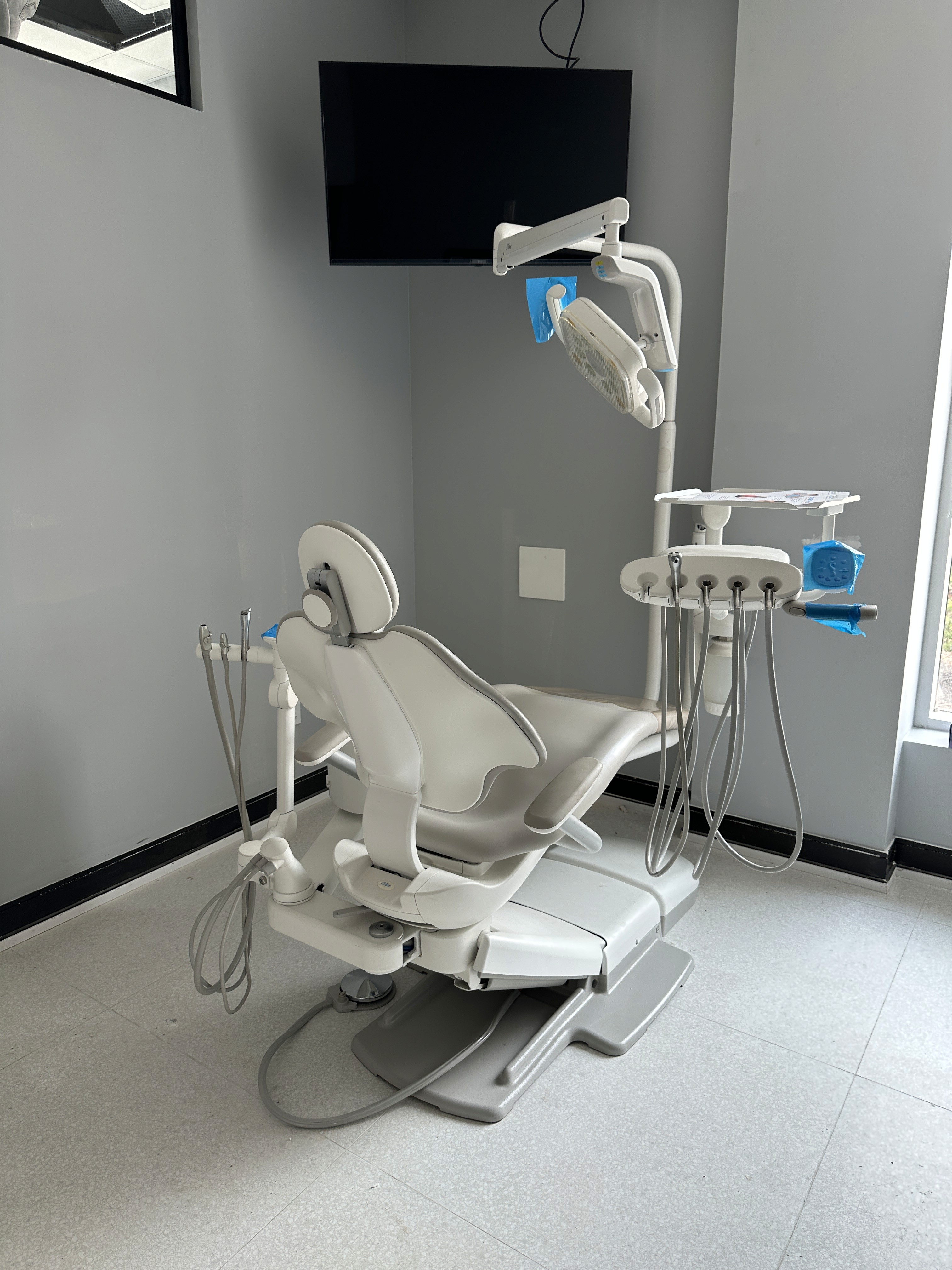
Backflow Testing for Dental and Medical Clinics in Ontario
If you run a dental clinic or medical clinic in Ontario, backflow compliance is one of those issues that rarely feels urgent until you receive a notice, a survey request, or a failed test report. The problem is that dental and medical environments are exactly the type of properties municipalities consider higher risk for cross connections, which is why clinics often get classified as moderate or high hazard under cross connection control programs.
In practical terms, that usually means your clinic needs the right backflow prevention device installed and it needs to be tested on a recurring schedule by a certified tester. In many cases, clinics end up requiring an RPZ valve rather than a double check valve assembly, because the potential for contamination is considered more serious than in standard commercial occupancies.
If you want a clinic-ready solution that covers installation, certified testing, documentation, and repairs, start with Backflow Prevention Services.
Why dental and medical clinics are treated as higher hazard
Municipal backflow programs are built around one core idea: if contaminated water can be pulled backward into the drinking water system, the risk is not limited to the building. That risk can extend into the municipal distribution system. Dental and medical clinics are frequently treated as higher hazard because they tend to include specialized plumbing connections, treatment equipment, sterilization processes, and fixtures that can create cross connection risks if pressure changes occur.
Clinics commonly have equipment and plumbing features like sterilization sinks, lab sinks, specialty hoses, treatment room plumbing, and dedicated water lines that increase the chance of a cross connection being present. Even if your day-to-day water use seems normal, municipal programs focus on what could happen during backsiphonage or backpressure events. Those events can be triggered by water main breaks, hydrant use, sudden pressure drops, pump failures, or changes in demand in the area.
That is why clinics are frequently required to install a testable backflow preventer and complete certified backflow testing.
Do dental clinics and medical clinics usually need an RPZ valve in Ontario?
Many do. The device requirement depends on hazard classification, and hazard classification comes from a cross connection survey or program evaluation. The two most common testable devices you’ll hear about are the double check valve assembly (DCVA) and the reduced pressure zone assembly (RPZ valve).
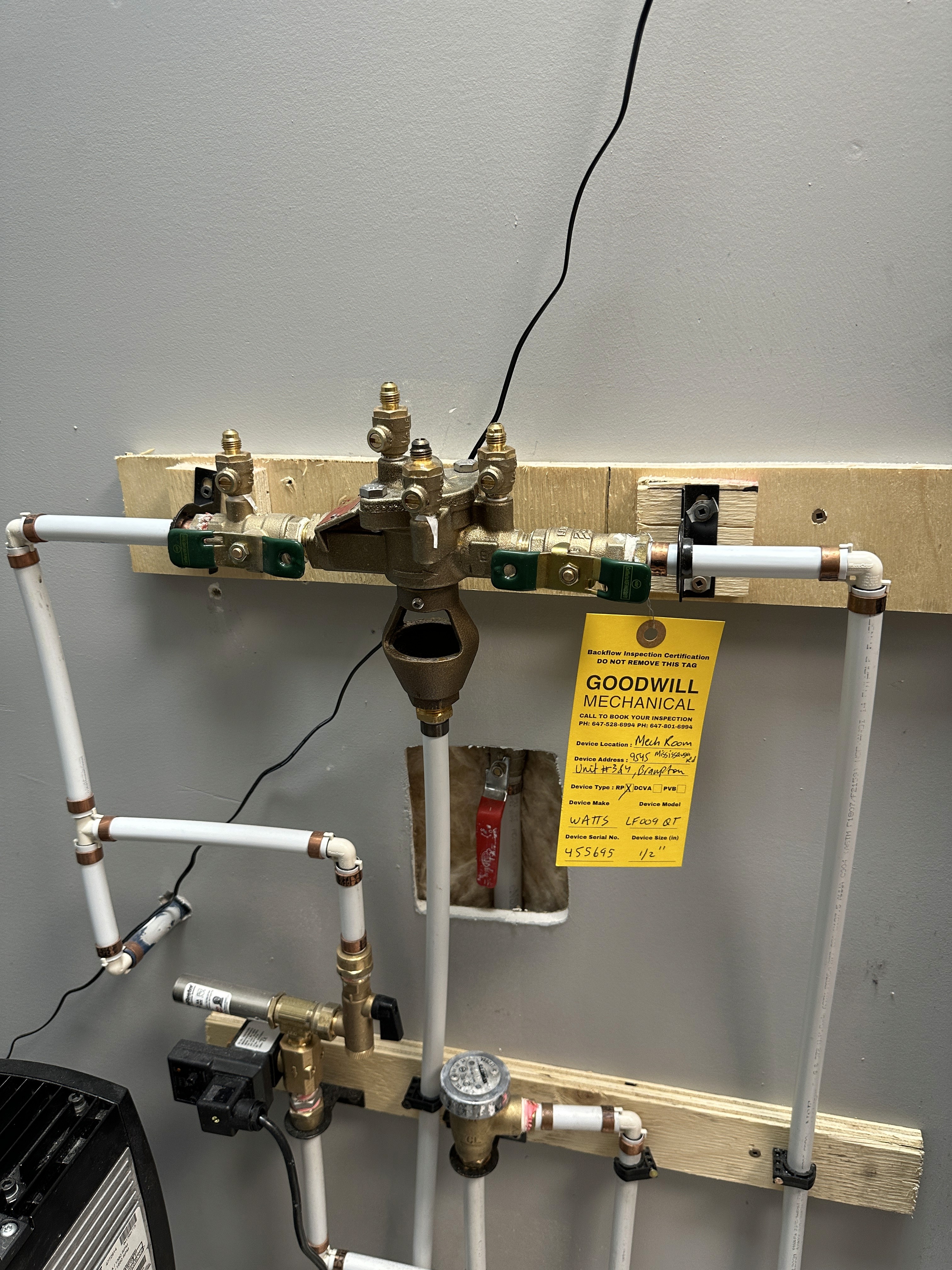
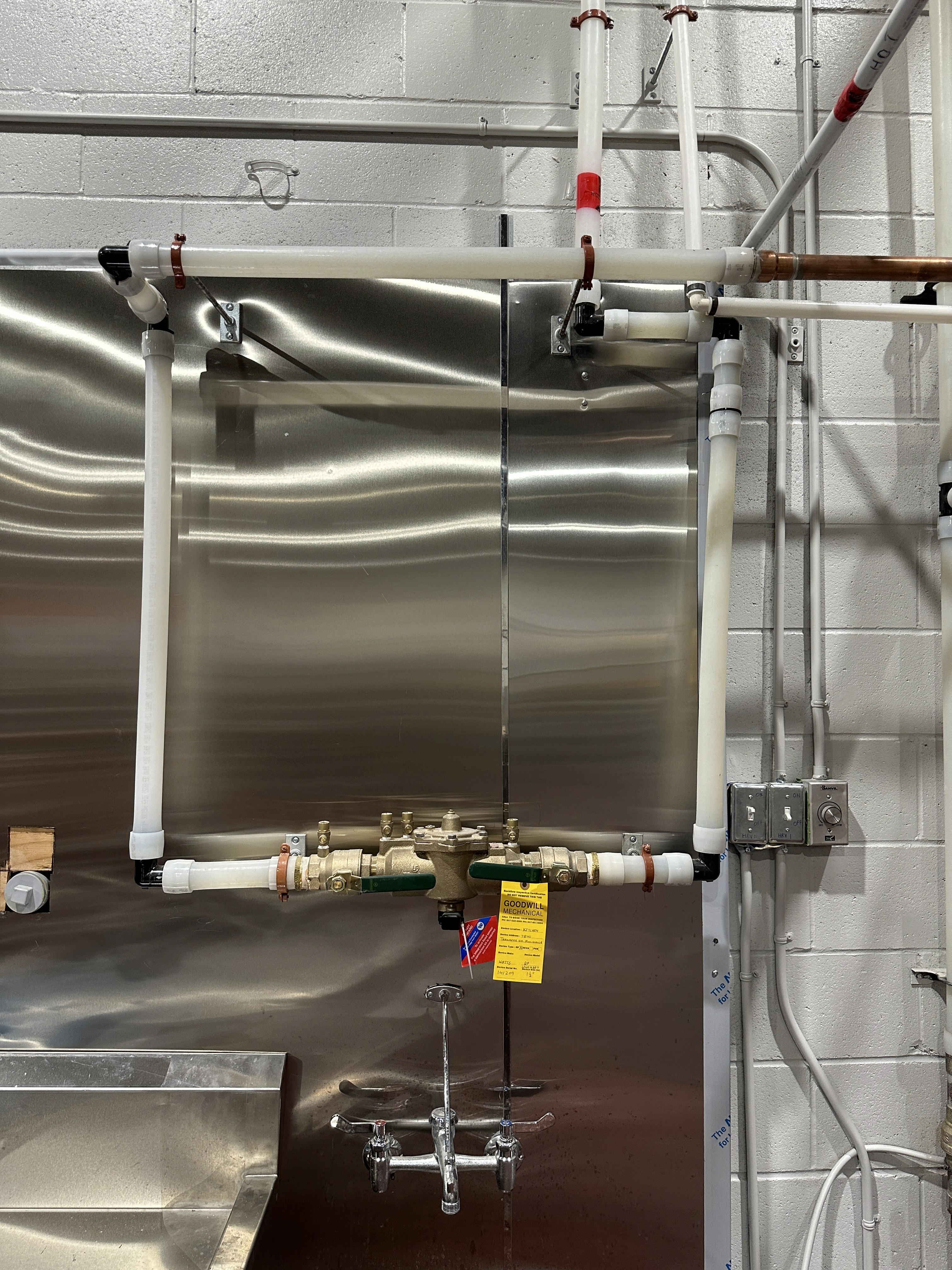
A double check valve assembly is typically used for moderate hazard situations where contamination would be undesirable but not considered a direct health threat. An RPZ valve is typically used for high hazard situations because it provides higher protection through its relief valve design, which can discharge water to prevent contaminated water from moving into the potable supply.
Dental and medical clinics often trend toward higher hazard classification because of the nature of equipment and specialized plumbing connections. If your program requires an RPZ, installing a DCVA instead can lead to inspection failure and rework costs. If you are unsure which device applies to your clinic, the fastest way to avoid expensive mistakes is to have the site evaluated and the device confirmed before installation.
If you’re in Peel or Halton and you want a local compliance path, use these service pages: Backflow Prevention in Brampton, Backflow Prevention in Mississauga, and Backflow Prevention in Milton.
How backflow testing for clinics actually works
Backflow testing is not a quick glance at the device. A certified backflow tester uses calibrated equipment to measure performance values and confirm the device’s internal components are doing their job. For an RPZ valve, testing typically includes verifying differential pressure across check valves and confirming the relief valve behavior. For a DCVA, testing focuses on the integrity and differential pressure performance of the check valves.
A properly run test produces documented results. If the device passes, the property owner receives backflow device certification documentation that can be submitted to the municipality or kept on file for program compliance. If the device fails, the tester should identify the likely cause and the next step becomes backflow repair, rebuild, or replacement followed by re-testing.
This is why clinic owners should choose a contractor who can handle the entire loop: testing, repair, re-testing, and compliance documentation, without turning your clinic into a multi-week scheduling headache. That end-to-end approach is what Backflow Prevention Services is built for.
How often is backflow testing required for clinics?
Testing frequency is set by the municipality or program requirements and is often annual for many commercial and institutional properties. Some properties may have different intervals depending on hazard classification, device type, and program rules. The safe operating assumption for most clinic owners is that testing is recurring and needs to be scheduled proactively rather than reactively.
The best compliance strategy is to treat backflow testing like a fixed operational deadline. When you schedule in advance, you avoid the “notice arrives and we scramble” scenario, and you reduce the chance that a failure causes operational disruption.
What happens if your clinic fails a backflow test?
Clinic owners often panic when they see a fail result, but failure is common and usually fixable. Devices fail for predictable reasons: internal wear, debris caught in check valves, spring fatigue, relief valve issues on RPZ assemblies, corrosion, or freeze damage in exposed locations.
A failed backflow test does not automatically mean the entire device must be replaced. Many failures can be corrected by rebuilding the device with internal components and then re-testing it to restore certification. Replacement becomes more likely when the device body is damaged, heavily corroded, improperly sized, or when repair is not cost-effective.
The key is speed. Municipal programs expect correction and re-testing. If a clinic delays repair, the risk escalates from “maintenance issue” to “compliance issue,” which can lead to enforcement letters, follow-ups, and operational stress that your clinic does not need.
If you want a single point of contact for repair plus re-testing, book through Backflow Prevention Services.
Installation mistakes that cause clinic compliance problems
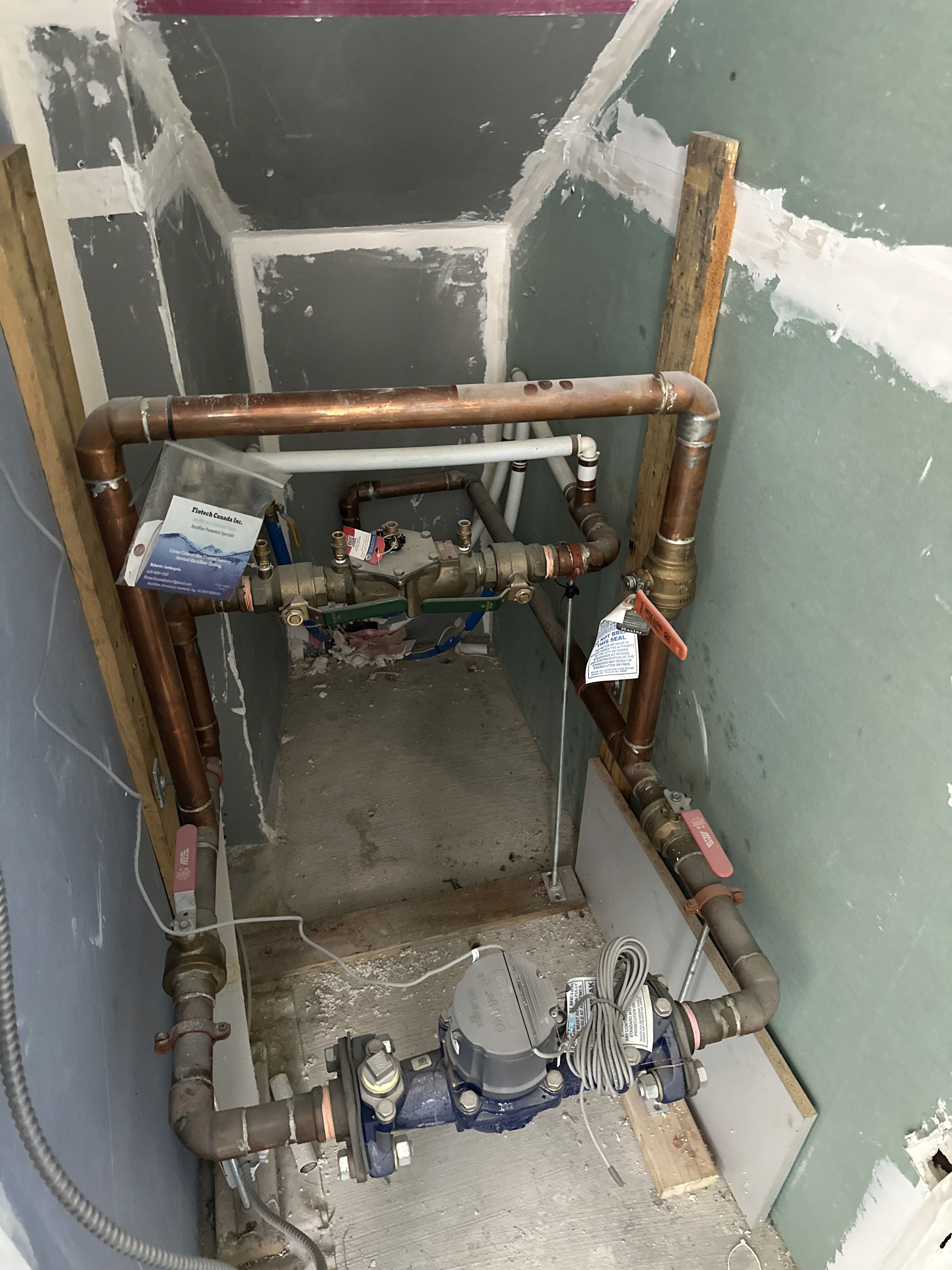
In clinics, the biggest compliance problems often come from poor installation choices rather than the device itself. RPZ valves, in particular, require smart placement and practical considerations. If the relief valve discharges, the installation needs to safely handle that discharge without creating flooding risk or damaging finished areas. The device also needs to be accessible for testing, because a device that cannot be tested properly becomes a repeat compliance problem.
Another common issue is installing the wrong device type because someone guessed the classification. If the program expects an RPZ and a DCVA is installed, you can end up paying twice: once for the installation and again for the correction. Clinics do not benefit from “lowest price installs” if it creates inspection failures later.
A compliant clinic installation is not just plumbing. It is plumbing plus documentation plus testability plus inspection readiness.
Why clinics should bundle backflow with commercial plumbing support
Clinics don’t operate like typical retail. They have strict operational hours, hygiene constraints, and zero tolerance for unnecessary shutdowns. The right contractor is one who can coordinate backflow work as part of a broader commercial plumbing approach, so you’re not calling multiple vendors for related issues like mechanical room improvements, water pressure problems, fixture upgrades, or drainage issues.
If you want that integrated capability, connect this article to Commercial Plumbing Services so clinic owners and property managers can see the full scope.
Clinic-focused compliance checklist that actually works
The simplest way for clinic owners to stay ahead is to create a repeatable compliance cycle. You confirm the device type, you schedule certified backflow testing before deadlines, you repair quickly if needed, and you keep documentation organized. This sounds basic, but it is the exact routine that prevents compliance stress and prevents operational interruptions.
If you operate multiple clinics, the easiest win is putting them on the same annual cycle so you don’t miss testing windows. That also tends to reduce administrative overhead because you are dealing with one contractor, one schedule, and consistent reporting.
Book backflow testing for your dental or medical clinic
If you run a dental clinic or medical clinic in Ontario and you need certified backflow testing, RPZ valve installation, or backflow repair after a failed test, Goodwill Mechanical Inc. can handle the full compliance loop. We test, document, repair, re-test, and keep your clinic inspection-ready with minimal disruption.
Start here: Backflow Prevention Services.
If you’re local, use: Backflow Prevention in Brampton, Backflow Prevention in Mississauga, or Backflow Prevention in Milton.