RPZ Valve vs Double Check Valve Assembly: Which Backflow Device Does Your Ontario Property Actually Require?
22 Feb 2026
Schedule Backflow Prevention Checkup
RPZ Valve vs Double Check Valve Assembly: Which Backflow Device Does Your Ontario Property Actually Require?
If your building has been enrolled in a municipal cross connection control program, one of the first questions you will face is whether you need an RPZ valve or a double check valve assembly.
This is not a preference decision. It is a compliance decision.
Installing the wrong device can result in inspection failure, rework costs, permit delays, and enforcement notices. Installing the correct device ensures your property remains compliant with Ontario municipal backflow regulations and protected against potable water contamination.
If you require professional evaluation, installation, or certified testing, visit Backflow Prevention Services.
Understanding Hazard Classification in Ontario
Backflow prevention device selection is determined by hazard level.
Municipal cross connection control programs classify water connections as:
• Low hazard
• Moderate hazard
• High hazard
The classification is based on the potential severity of contamination if backflow occurs.
Moderate hazard means contamination would be objectionable but not pose a direct health risk.
High hazard means contamination could pose a serious health risk.
The hazard level determines which device is acceptable under Ontario Building Code standards and municipal enforcement programs in regions such as Peel and Halton.
If your property operates in Brampton, Mississauga, or Milton, device selection will follow local enforcement requirements. See:
Backflow Prevention in Brampton
Backflow Prevention in Mississauga
Backflow Prevention in Milton
What Is an RPZ Valve?
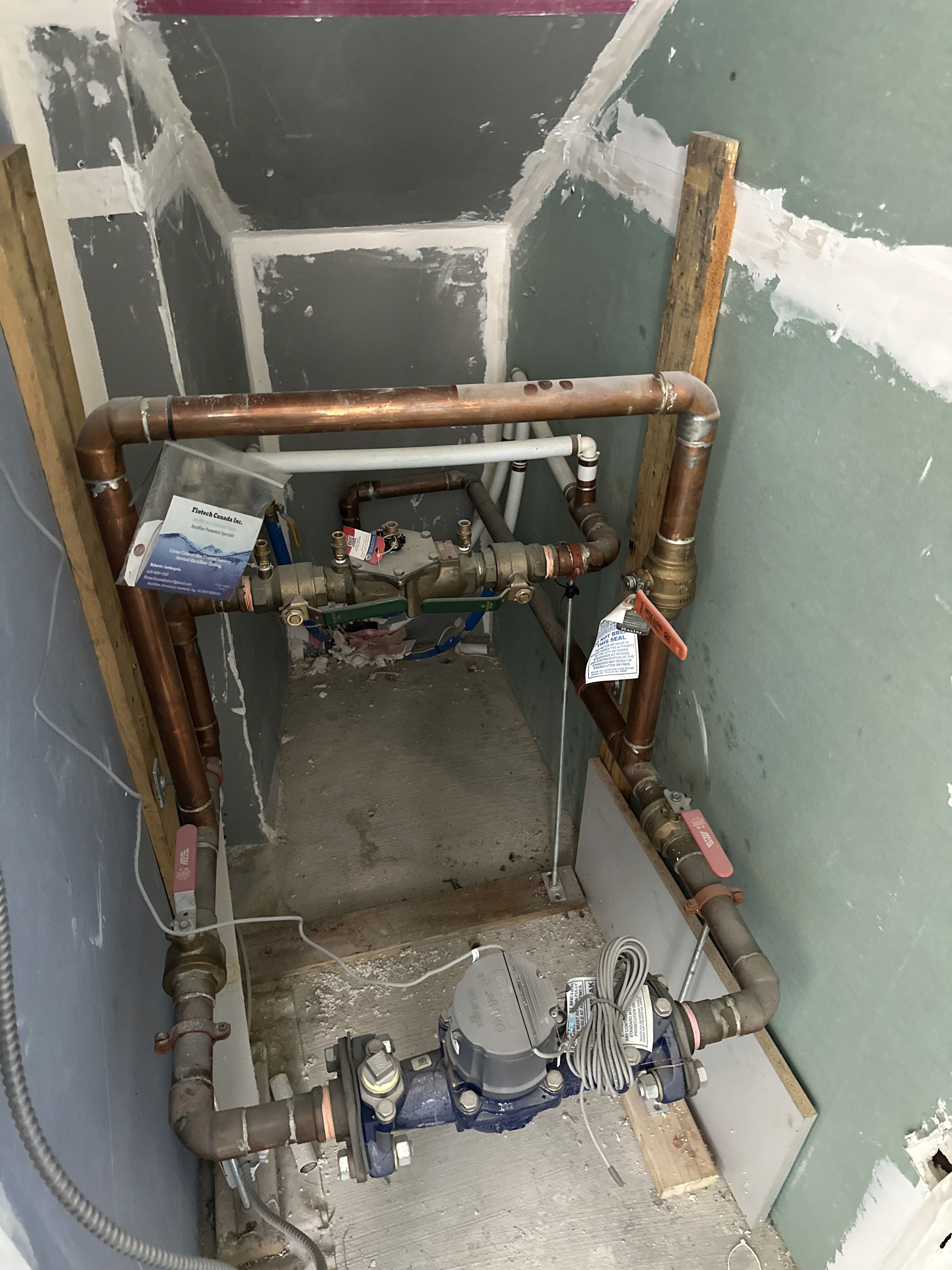
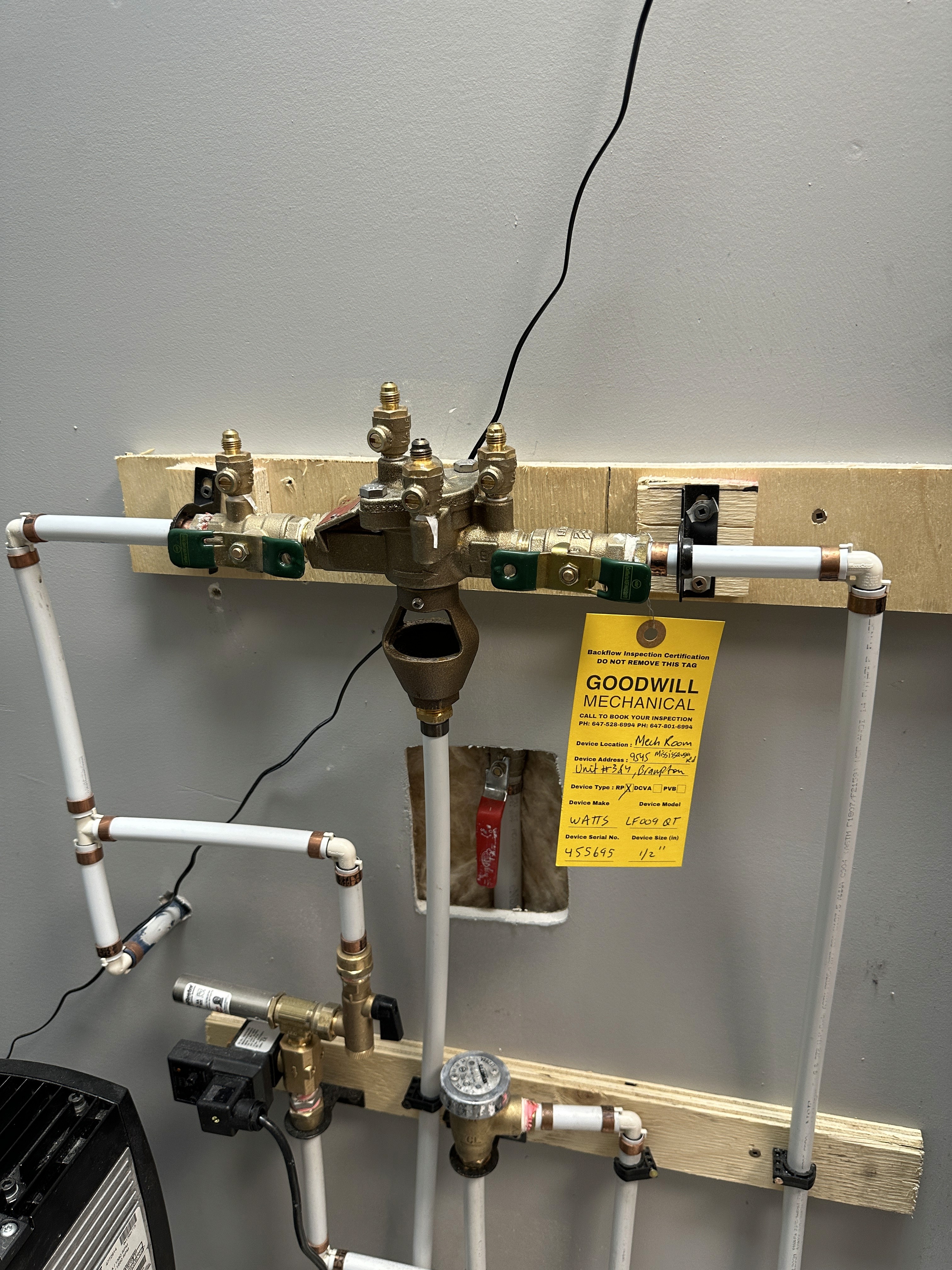
An RPZ valve, or Reduced Pressure Zone assembly, is a high hazard backflow prevention device designed to protect potable water systems when there is a significant contamination risk.
An RPZ assembly includes:
• Two independently acting check valves
• A hydraulically operated relief valve located between the check valves
• Shutoff valves at each end
• Test cocks for certified testing
The defining feature is the relief valve.
If the pressure differential across the first check valve drops below an acceptable threshold, the relief valve opens and discharges water to atmosphere. This prevents contaminated water from moving downstream into the potable system.
The relief valve makes the RPZ assembly suitable for high hazard conditions.
Where RPZ Valves Are Required
RPZ valve installation is commonly required in properties that contain:
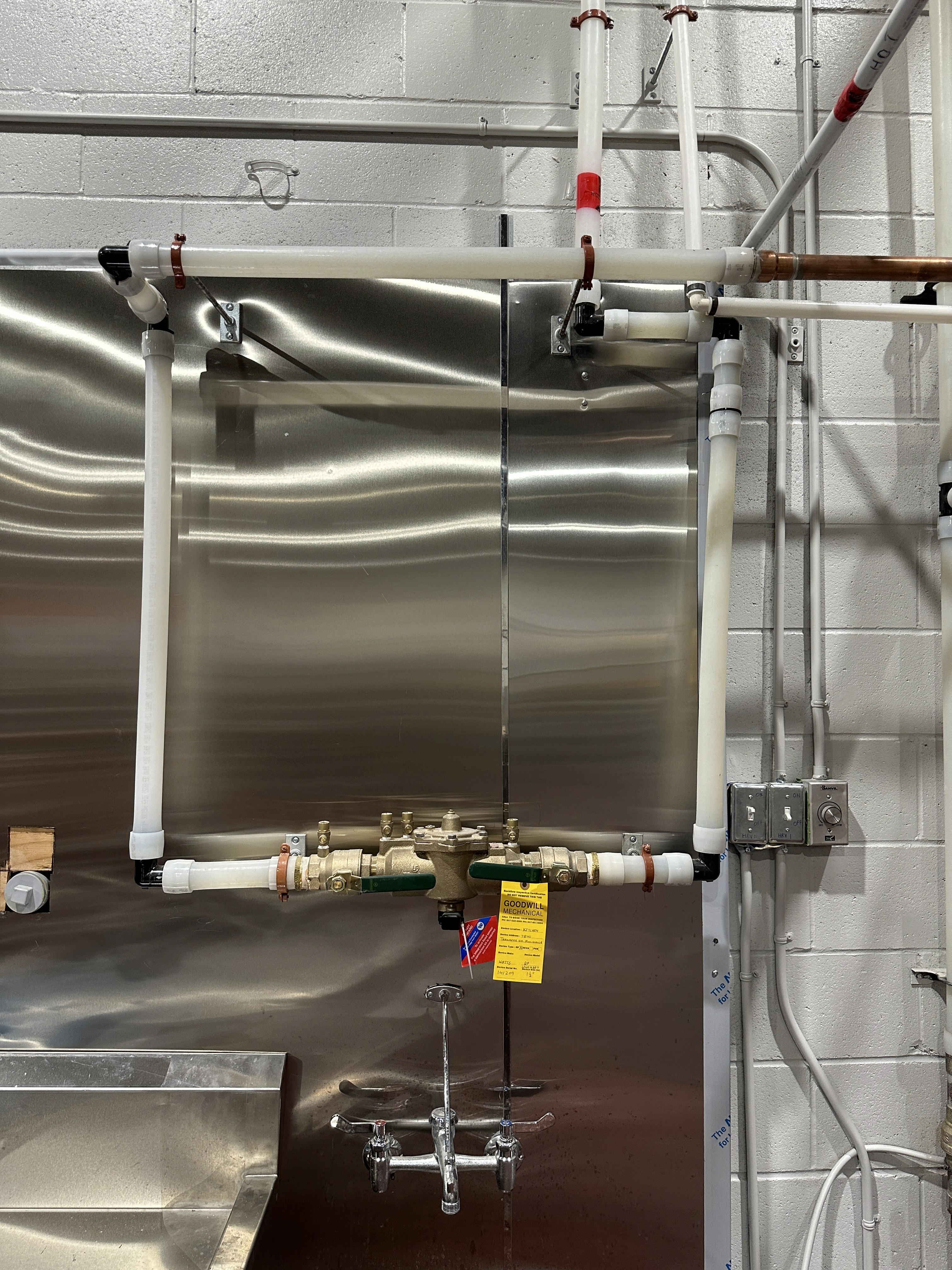
• Commercial kitchens
• Restaurants with grease interceptors
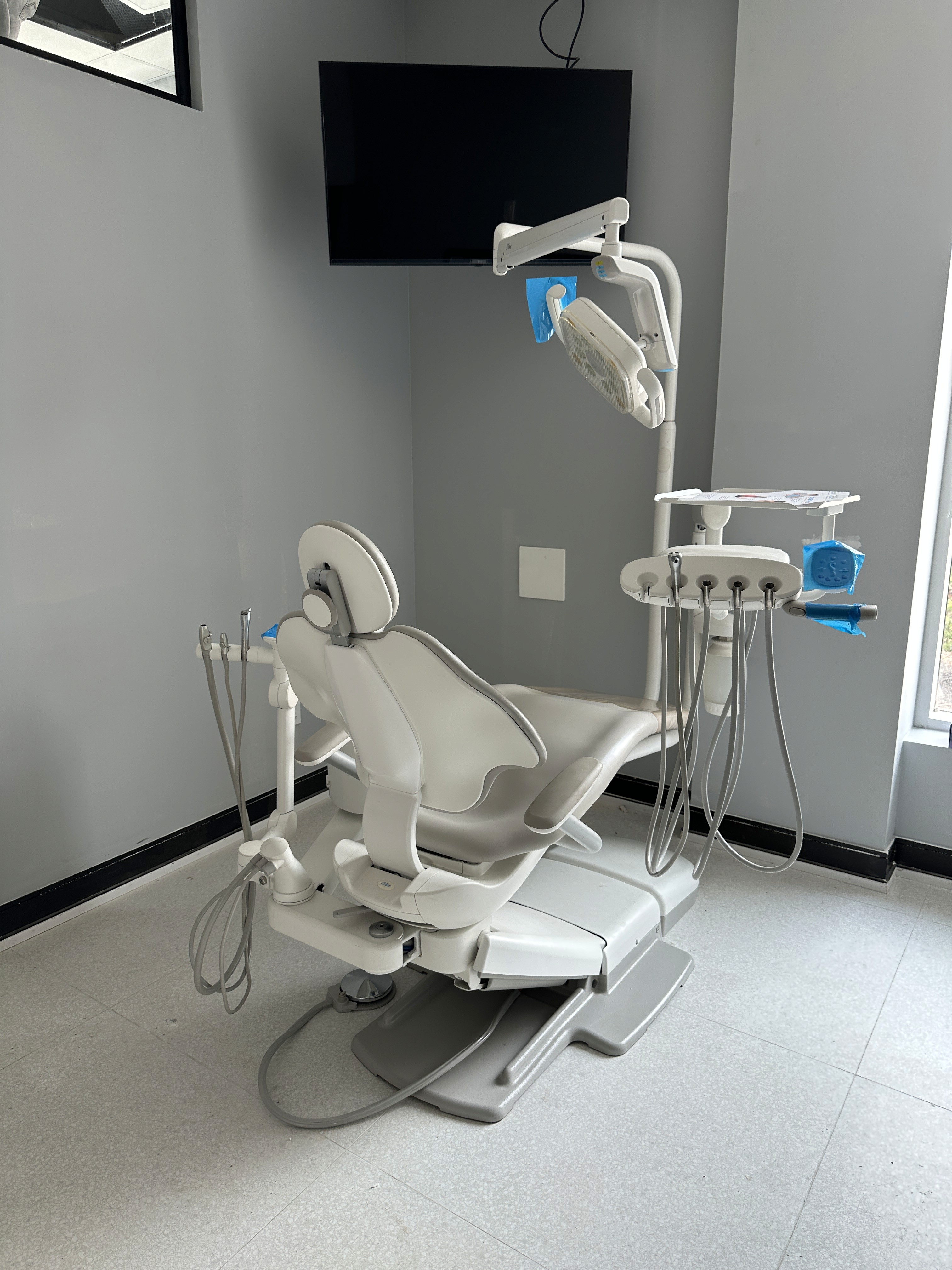
• Dental clinics
• Medical clinics
• Food processing facilities
• Manufacturing facilities
• Buildings with chemical injection systems
• Irrigation systems using fertilizers or pesticides
• Boiler systems with chemical treatment
If a cross connection survey identifies high hazard conditions, an RPZ assembly is typically mandatory.
Attempting to install a double check valve where an RPZ is required will almost certainly fail inspection.
What Is a Double Check Valve Assembly (DCVA)?
A double check valve assembly contains:
• Two internally spring-loaded check valves
• Shutoff valves
• Test cocks
It does not include a relief valve.
The DCVA is designed for moderate hazard applications where contamination would not pose a direct health threat.
Because it lacks a relief valve, it cannot provide the same level of protection as an RPZ assembly.
Where Double Check Valve Assemblies Are Used
DCVA installation is commonly permitted for:
• Office buildings
• Commercial plazas
• Warehouses
• Multi-unit residential buildings
• Fire line systems without additives
• Irrigation systems without chemical injection
If a property’s hazard classification remains moderate, a double check valve assembly may satisfy municipal requirements.
However, if building use changes, reclassification may require upgrading to an RPZ assembly.
Technical Performance Differences
The engineering difference between these devices lies in pressure zone control.
An RPZ assembly creates a reduced pressure zone between its two check valves. That zone is continuously monitored. If pressure drops below required levels, the relief valve discharges water.
A double check valve assembly relies solely on the integrity of its two check valves. There is no discharge mechanism. If both checks fail simultaneously, contamination can occur.
Because of this:
RPZ = Active fail-safe design
DCVA = Passive protection design
That difference is why RPZ valves are required for high hazard conditions.
Installation Requirements: What Property Owners Overlook
RPZ valves require proper drainage.
Because the relief valve discharges water under failure conditions, the installation must include:
• Adequate floor drainage
• Sufficient clearance
• Proper vertical orientation
• Freeze protection
Improper drainage design is one of the most common installation failures.
Double check valve assemblies do not discharge water during failure, so drainage requirements are less complex.
Installation complexity affects:
• Labor time
• Permit requirements
• Total installation cost
If you need installation pricing, request a quote through Backflow Prevention Services.
Testing Differences: RPZ vs DCVA
Both assemblies require certified backflow testing.
RPZ testing includes:
• Differential pressure test across check valve #1
• Differential pressure test across check valve #2
• Relief valve opening point verification
• Observation of discharge behavior
DCVA testing includes:
• Differential pressure across both check valves
• Verification of check integrity
Because RPZ valves include more components, they typically have:
• Slightly longer test times
• Higher probability of failure due to relief valve wear
If your device fails testing, read:
What Happens If You Fail a Backflow Test in Ontario
Cost Comparison: Installation and Maintenance
RPZ Installation Cost Drivers:
• Larger physical assembly
• Relief valve component
• Drainage infrastructure
• Higher labor complexity
Double Check Valve Installation Cost Drivers:
• Simpler assembly
• Fewer components
• Less drainage infrastructure
Maintenance costs are typically higher for RPZ valves due to additional moving components.
However, installing a DCVA where an RPZ is required can result in complete reinstallation, doubling your cost.
Compliance mistakes are more expensive than proper installation.
Fire Line Backflow Devices
Fire protection systems may require:
• Double check detector assemblies
• RPZ detector assemblies
If fire system water contains additives or chemical treatments, an RPZ detector may be required.
Never assume fire lines are automatically moderate hazard. Classification depends on system configuration.
When You Must Upgrade from DCVA to RPZ
Upgrade scenarios include:
• Change of building use
• Addition of chemical systems
• Installation of medical equipment
• Food processing modifications
• Irrigation chemical injection
For example, converting warehouse space into a food production facility can trigger reclassification from moderate to high hazard.
Municipal inspection after renovation can require full upgrade.
Common Compliance Mistakes
Property owners frequently make these errors:
• Installing the cheaper device without hazard confirmation
• Ignoring drainage requirements for RPZ assemblies
• Delaying required testing
• Failing to obtain proper permits
• Assuming moderate hazard classification without survey
These mistakes result in inspection failure and rework costs.
Which Device Do You Actually Need?
You need:
RPZ valve if your property is high hazard
Double check valve assembly if your property is moderate hazard
The only way to know for certain is:
Cross connection survey
Hazard classification
Proper device selection
If you operate in regulated municipalities such as Brampton, Mississauga, or Milton, compliance is enforced.
Schedule Installation or Testing
If you need:
• RPZ valve installation
• Double check valve assembly installation
• Certified backflow testing
• Backflow repair after failure
Goodwill Mechanical Inc. provides professional installation and testing across the GTA.
Visit Backflow Prevention Services to request a quote.