Cambridge Backflow Prevention: Complete 2025 Guide for Property Owners
7 Dec 2025
Schedule Backflow Prevention Checkup
Cambridge Backflow Prevention: Complete 2025 Guide for Property Owners
Learn everything about cambridge backflow prevention, including legal requirements, annual inspections, approved devices, and how Goodwill Mechanical provides certified testing and compliance for homeowners and businesses in Cambridge, Ontario.
Ensuring clean, safe water in Cambridge is a shared responsibility. Backflow incidents — where contaminated water reverses direction and enters the drinkable supply — pose serious health risks. That’s why Cambridge Backflow Prevention is not only essential but legally required under By-law 146-03 and the city's Cross-Connection Control Program.
Goodwill Mechanical is a certified provider offering professional backflow testing, device installation, surveys, and compliance documentation for residential, commercial, and industrial properties throughout Cambridge.
What Is Backflow and Why Cambridge Residents Should Care
Backflow occurs when water flows backward into the potable water system. This typically happens when pressure drops in the municipal supply — for example, during a watermain break, fire hydrant use, or large-scale plumbing event.
When this reversal happens, contaminants such as chemicals, bacteria, soaps, fertilizers, and industrial fluids can enter the drinking water system.
How Backflow Forms
Backpressure: Elevated pressure in your system forces water back into city lines.
Backsiphonage: Low pressure in the city system pulls water backward into the supply.
Even a small cross-connection can contaminate a large section of the water distribution network.
Understanding Cross-Connections in Cambridge Buildings
A cross-connection is any point where potable water meets non-potable water. Common examples include:
In Homes
Garden hose bibs
Irrigation systems
Pool fill lines
Boilers
Water softeners
In Businesses
Commercial kitchens
Medical equipment
Fire suppression systems
Industrial washers
Manufacturing processes
The more complex the plumbing, the higher the risk — making cambridge backflow prevention an essential safety measure for property owners.
Cambridge Water Use By-law 146-03 Requirements
The City of Cambridge enforces its water safety rules under Water Use By-law 146-03, requiring:
✔ Backflow prevention devices in moderate- and severe-risk buildings
✔ Annual testing by certified testers
✔ Installation of approved devices only
✔ Proper maintenance and documentation
✔ Cross-connection surveys when required
By-law reference:
🔗 https://www.cambridge.ca/en/service-cambridge/resources/Building-Div-Resources/Water-Use-Bylaw-146-03-.pdf
City of Cambridge Cross-Connection Control Program
The City of Cambridge operates a dedicated program to ensure safe drinking water.
Program Goals
Protect municipal water from contamination
Identify high-risk properties
Enforce annual testing
Ensure proper installation and maintenance
Program page:
🔗 https://www.cambridge.ca/en/your-city/cross-connection-control-program.aspx
Who Must Comply with Cambridge Backflow Prevention Regulations?
Properties are classified based on risk: low, moderate, or severe hazards. Most commercial and industrial buildings fall under regulated classifications.
Residential Requirements
Certain residential properties require backflow prevention:
Houses with irrigation systems
Homes with pools or decorative ponds
Multi-unit buildings
Homes with boiler systems connected to potable water
Commercial Requirements
Regulated buildings include:
Restaurants
Medical clinics
Dental offices
Auto repair shops
Salons & spas
Laundromats
Schools
Retail plazas
Industrial Requirements
Because of the higher risk level, industrial facilities often require RP devices:
Factories
Laboratories
Chemical storage facilities
Food processing plants
Printing shops
If your building has high-risk water equipment, cambridge backflow prevention is not optional — it’s mandatory.
Approved Backflow Prevention Devices in Cambridge
Device Type | Hazard Level | Common Applications |
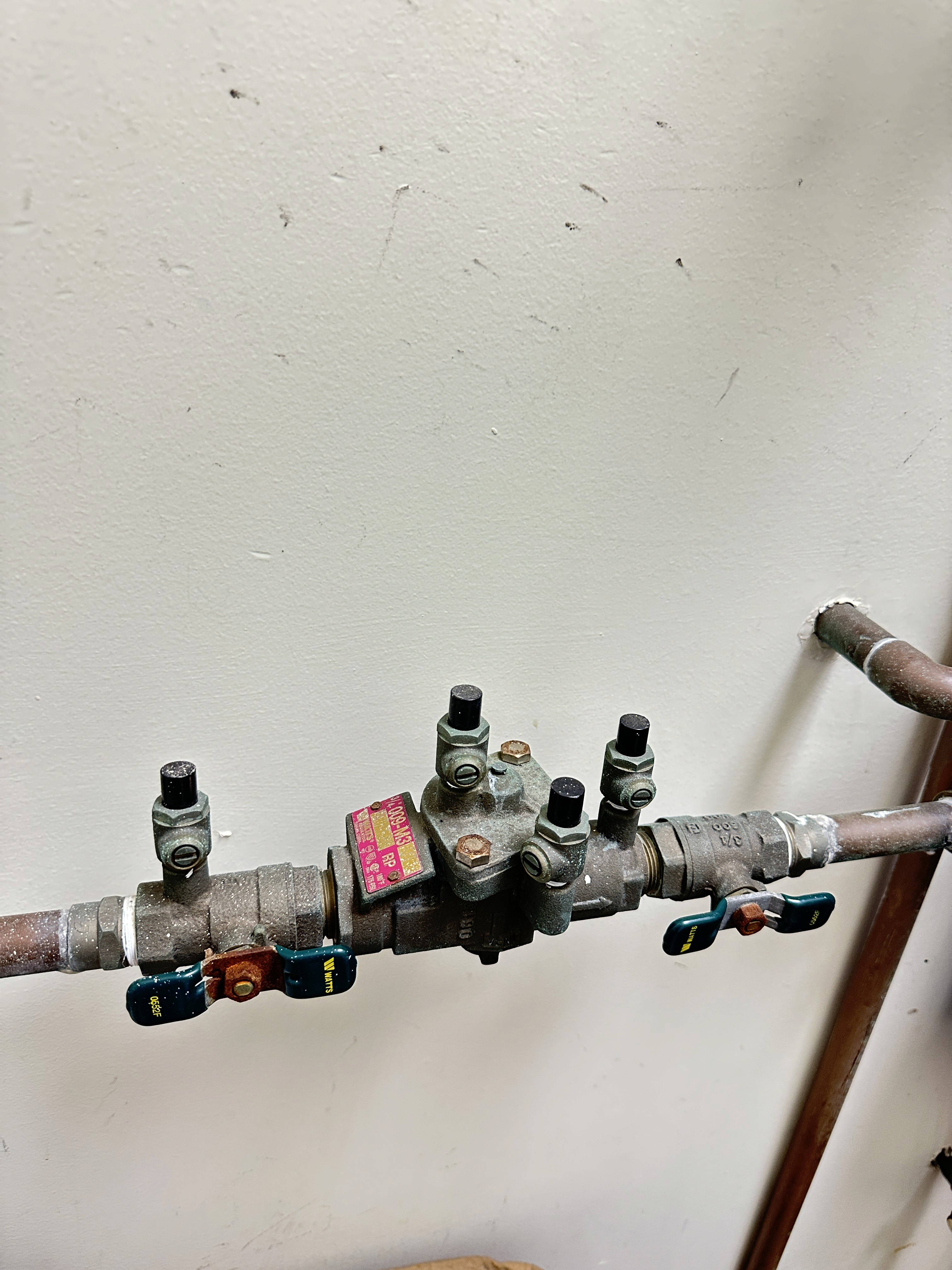
RP (Reduced Pressure Zone) | Severe | Labs, chemical processing, hospitals |
DCVA (Double Check Valve Assembly) | Moderate | Commercial buildings, schools |
PVB (Pressure Vacuum Breaker) | Moderate | Lawn irrigation systems |
SVB (Spill-Resistant Vacuum Breaker) | Moderate | Smaller irrigation or fire systems |
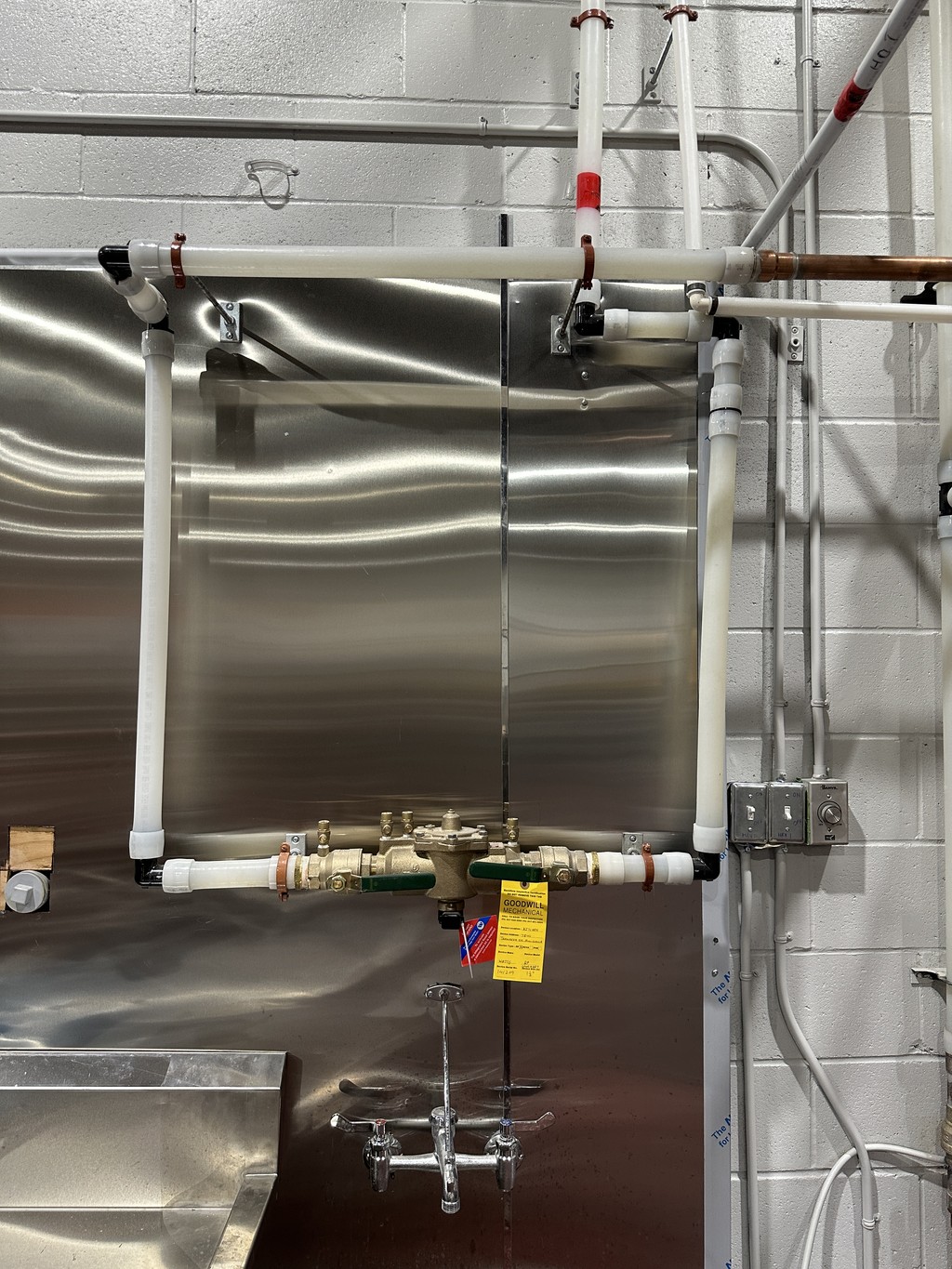
Goodwill Mechanical is certified to install, test, and repair all approved devices.
Goodwill Mechanical’s Certified Backflow Services in Cambridge
Goodwill Mechanical provides complete solutions for cambridge backflow prevention, including:
✔ Certified Annual Testing
Performed using calibrated gauges by licensed technicians.
✔ Cross-Connection Surveys
Required for new or modified buildings and periodic compliance.
✔ Device Installation & Replacement
We install RP, DCVA, PVB, and SVB devices to meet Cambridge by-law standards.
✔ Maintenance & Emergency Repairs
If a device fails, Goodwill Mechanical provides fast service.
✔ Report Filing
All documentation is submitted according to city requirements.
Step-by-Step Cambridge Backflow Inspection Process
1. Scheduling & Property Review
We review your building type, hazard classification, and past compliance.
2. On-Site Testing
Our certified technician tests each valve and ensures proper function.
3. Repairs or Adjustments
If a device fails testing, repairs are completed immediately.
4. Documentation Submission
Goodwill Mechanical handles all reporting to the City of Cambridge.
5. Annual Reminders
We notify you each year so your property never risks non-compliance.
Costs of Backflow Testing & Device Installation in Cambridge
Service | Typical Price (CAD) |
Annual Backflow Test | $150–$400 |
Cross-Connection Survey | $250–$600 |
Device Installation | $500–$2,200 |
Repairs | Varies by part & complexity |
Goodwill Mechanical offers competitive rates and multi-property discounts.
Common Backflow Violations in Cambridge
Property owners often face these compliance issues:
Missing annual test reports
Incorrectly installed devices
Unapproved device types
Frozen or damaged valves
No cross-connection survey on record
Inaccessible installations
Goodwill Mechanical ensures your system meets every requirement of cambridge backflow prevention.
Why Choose Goodwill Mechanical
With years of hands-on experience, Goodwill Mechanical offers:
✔ Certified backflow inspectors
✔ Same-day service available
✔ Knowledge of Cambridge by-laws
✔ Accurate reporting
✔ Transparent pricing
✔ Fully insured technicians
Your safety — and the city's drinking water — is in trusted hands.
Frequently Asked Questions
1. Is backflow testing mandatory in Cambridge?
Yes. Annual testing is required for all moderate- and severe-hazard properties.
2. Can Goodwill Mechanical submit the test report for me?
Absolutely — we handle all submissions to the City of Cambridge.
3. Which device do I need?
Device type depends on your building’s hazard classification. We determine this during your cross-connection survey.
4. What happens if I skip the annual inspection?
You may face fines, warnings, or compliance enforcement from the city.
5. Do residential homes require backflow devices?
Some — especially homes with irrigation, pools, or complex mechanical systems.
6. How long does the test take?
Typically 45–60 minutes per device.
Conclusion
Cambridge backflow prevention is essential for protecting the city's drinking water supply and ensuring compliance with By-law 146-03. Whether your property needs annual testing, device installation, or emergency repairs, Goodwill Mechanical is your trusted certified partner.
Backflow incidents can put entire neighborhoods at risk. With Goodwill Mechanical, you stay protected, compliant, and confident.